Disney Installs Alisa Bowen as Fubo CEO to Replace Co-Founder David Gandler Following Settlement Driven Takeover

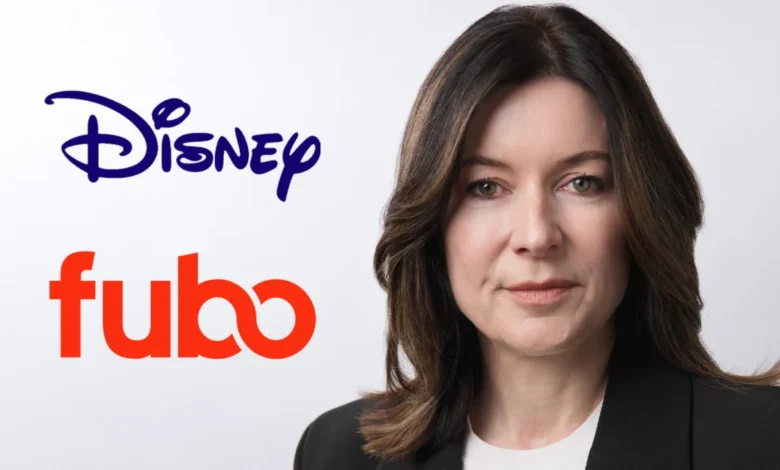
The Walt Disney Company has officially installed Alisa Bowen, a veteran executive of its streaming division, as the new Chief Executive Officer of Fubo, marking a definitive shift in leadership for the sports-first streaming service. This move comes less than a year after Disney secured a 70% controlling interest in the company as part of a high-profile antitrust settlement. Bowen, who most recently served as the president of Disney+, replaces Fubo co-founder David Gandler, effective immediately. The transition, announced late Thursday, signals a new era of corporate integration for Fubo as Disney seeks to consolidate its footprint in the increasingly competitive virtual multichannel video programming distributor (vMVPD) market.
The Strategic Shift in Leadership
The appointment of Alisa Bowen represents a significant departure from the management style that defined Fubo’s first decade. David Gandler, who co-founded the service in 2015 as a soccer-focused platform, was known throughout the industry for a "pugnacious and buccaneering" leadership approach. Under Gandler, Fubo grew into a major player in the live TV streaming space, often positioning itself as a scrappy underdog fighting against the "big tech" and "big media" incumbents. Gandler was frequently vocal about the unfair advantages held by deeper-pocketed rivals, a stance that eventually led to a legal confrontation with the very company that now controls his former firm.
In contrast, Alisa Bowen is a quintessential corporate strategist with a decade of experience within the Disney ecosystem. During her tenure at Disney, she was a founding member of the streaming leadership team, playing a pivotal role in the global launch and scaling of Disney+, ESPN+, and Hulu. Before joining Disney, Bowen held senior executive positions at News Corp, Dow Jones, and Thomson Reuters, bringing nearly 30 years of experience in product development, digital media, and global operations. Her relocation from Burbank, California, to Fubo’s headquarters in New York City underscores Disney’s commitment to a hands-on management approach.
The Road to Acquisition: A Legal and Strategic Chronology
The path to Disney’s 70% control of Fubo was forged in a courtroom rather than a traditional boardroom negotiation. The transformation began in early 2025 when Disney, Fox, and Warner Bros. Discovery (WBD) announced plans to launch a joint sports streaming venture, tentatively titled Venu Sports. Fubo, fearing that this "super-bundle" would monopolize sports broadcasting rights and offer terms to the joint venture that were unavailable to third-party distributors, filed a massive antitrust lawsuit.
Fubo’s legal argument centered on the claim that the media giants were engaging in anticompetitive behavior by "bundling" less desirable channels with high-demand sports networks, thereby driving up costs for consumers and squeezing independent distributors. After months of litigation and regulatory scrutiny, a settlement was reached in October 2025. As part of the agreement, Disney took a majority stake in Fubo, effectively absorbing its former adversary.
Since the takeover, Fubo has continued to operate as a stand-alone entity under the terms of the settlement, but the friction between Gandler’s independent vision and Disney’s corporate objectives reportedly became untenable. Industry sources indicate that Gandler was increasingly frustrated by what he perceived as Disney’s lack of urgency in growing the vMVPD business, particularly as the parent company focused on integrating Fubo’s assets with Hulu + Live TV.
Market Context and the Rise of YouTube TV
The leadership change at Fubo occurs against the backdrop of a rapidly shifting pay-TV landscape. As of early 2026, the combined subscriber base of Fubo and Hulu + Live TV stands at approximately 6.2 million. While this makes the Disney-controlled entity a formidable player, it still trails significantly behind the market leader, YouTube TV.
Google-owned YouTube TV has surpassed 10 million subscribers, positioning it to become the largest pay-TV operator in the United States as traditional cable giants like Comcast and Charter continue to lose customers to cord-cutting. The vMVPD sector has seen significant consolidation and attrition over the last several years:
- YouTube TV: Dominant market leader with over 10 million subscribers.
- Hulu + Live TV & Fubo: Currently combined at 6.2 million subscribers under Disney’s umbrella.
- Sling TV: Owned by Dish Network, the service has seen a steady decline in its subscriber base since 2022.
- DirecTV Stream: Now privately held, it has struggled with inconsistent messaging after its spin-off from AT&T.
- Philo and Frndly TV: Niche providers focusing on entertainment and lifestyle content without expensive sports rights. Frndly TV was notably acquired by Roku in 2025.
- PlayStation Vue: An early pioneer in the space that shuttered in 2019 due to high programming costs.
The "skinny bundle" concept, which launched in the mid-2010s with the promise of lower prices, has largely evaporated. Rising programming costs have forced vMVPDs to raise monthly fees, often exceeding $75 or $80, bringing them closer to the price points of the cable packages they were intended to replace. Fubo has been particularly impacted by these costs, leading to high-profile carriage disputes and the eventual blackout of channels owned by Warner Bros. Discovery and other major programmers.
Financial Performance and Operational Stability
Financially, Fubo has faced a difficult road to profitability. Despite its growth, the company’s stock price has struggled, recently hovering around the $9.56 mark. To avoid potential de-listing from major exchanges, the company recently executed a reverse stock split, a tactical move designed to artificially boost the share price and satisfy exchange requirements.
Interestingly, the market’s reaction to the CEO transition was muted. In after-hours trading following the announcement on Thursday, Fubo’s stock remained stable, suggesting that investors had already priced in a potential leadership change following the Disney acquisition.
Alisa Bowen’s primary mandate will be to "sharpen the strategy" across sports, news, and entertainment while driving the company toward sustainable profitability. This will likely involve deeper integration with Disney’s advertising technology and content ecosystem, potentially leveraging Fubo’s proprietary sports-viewing features—such as its "FanView" stats and interactive betting integrations—to enhance the broader Disney streaming portfolio.
Official Responses from Fubo and Disney
The transition was framed by the Fubo Board of Directors as a "culmination of a thoughtful process" to find a leader capable of navigating the company’s next phase. Andy Bird, Chairman of the Fubo Board, praised Bowen’s track record in a prepared statement.
"Following the combination with Hulu + Live TV last year, Fubo has reached a pivotal moment in its strategic evolution, with a compelling pay-TV platform, strong content portfolio, and unique integration in the Disney ecosystem," Bird stated. "Alisa’s appointment is the result of a search for a leader who can advance Fubo’s strategy and performance. She is a proven operator who brings nearly 30 years of experience, and we look forward to benefiting from her expertise as Fubo enters its next chapter."
In her own statement, Bowen expressed optimism about the platform’s future under Disney’s guidance. "I look forward to leading Fubo in its next phase as we sharpen its strategy across sports, news, and entertainment, accelerate growth, and drive profitability," she said.
David Gandler, who is also stepping down from the Fubo board, maintained a professional tone in his exit. He described his time leading the company as an "honor" and stated that the platform is "well-positioned for the future." Despite the rumored friction, the board officially thanked Gandler for his "pioneering vision" and his role in building the foundation for what Fubo has become.
Broader Implications for the Streaming Industry
The installation of Bowen at Fubo is more than just a personnel change; it is a signal of the ongoing "corporatization" of the streaming world. The era of the independent, disruptive streaming startup is largely coming to a close, replaced by a landscape dominated by a handful of media conglomerates and tech giants.
Disney’s decision to put a Disney+ veteran in charge suggests that Fubo may soon lose some of its independent identity in favor of becoming a specialized "sports tier" or a complementary service to the main Disney streaming bundle. This move also raises questions about the future of antitrust in the media space. By settling the Venu lawsuit through an acquisition of the plaintiff, Disney effectively neutralized a legal threat while simultaneously expanding its market share.
For consumers, the impact remains to be seen. While Disney’s vast resources could provide Fubo with more stable pricing and better technical infrastructure, the loss of an independent, "pugnacious" competitor like David Gandler could lead to less aggressive price competition in the vMVPD market. As Alisa Bowen takes the helm this Friday, the industry will be watching closely to see if she can successfully merge Fubo’s sports-centric DNA with Disney’s global streaming ambitions.